





-

Advantages of Liquid Silicone Rubber (LSR): Why It Is Replacing Traditional Rubber and Plastics
-
LSR Injection Molding (Cold Runner) vs. Compression Molding LSR (Runnerless): Process & Selection Guide
-
Medical Injection Molding DFM Checklist & Design Guidelines
-
Liquid Silicone Rubber (LSR) vs. Thermoplastic Injection Molding for Medical Devices


Medical Injection Molding DFM Checklist & Design Guidelines
2026-10-12


复制成功
During medical device product development, design engineers often face a frustrating dilemma: a precision plastic housing or microfluidic chip looks flawless in 3D CAD software, yet fails dramatically during initial mold trials with defects like sink marks, warpage, flash, or critical sticking. Medical injection molding demands extreme dimensional accuracy, pristine surface finishes, and strict biocompatible material compliance—making traditional trial-and-error prototyping exceptionally costly.
Skipping a rigorous Design for Manufacturability (DFM) evaluation early on often leads to project delays of weeks or months, alongside compounding costs for mold re-tooling and regulatory validation (IQ/OQ/PQ). How can you eliminate these costly pitfalls from day one? A systematic, uncompromising medical injection molding DFM checklist is the definitive blueprint for project success.
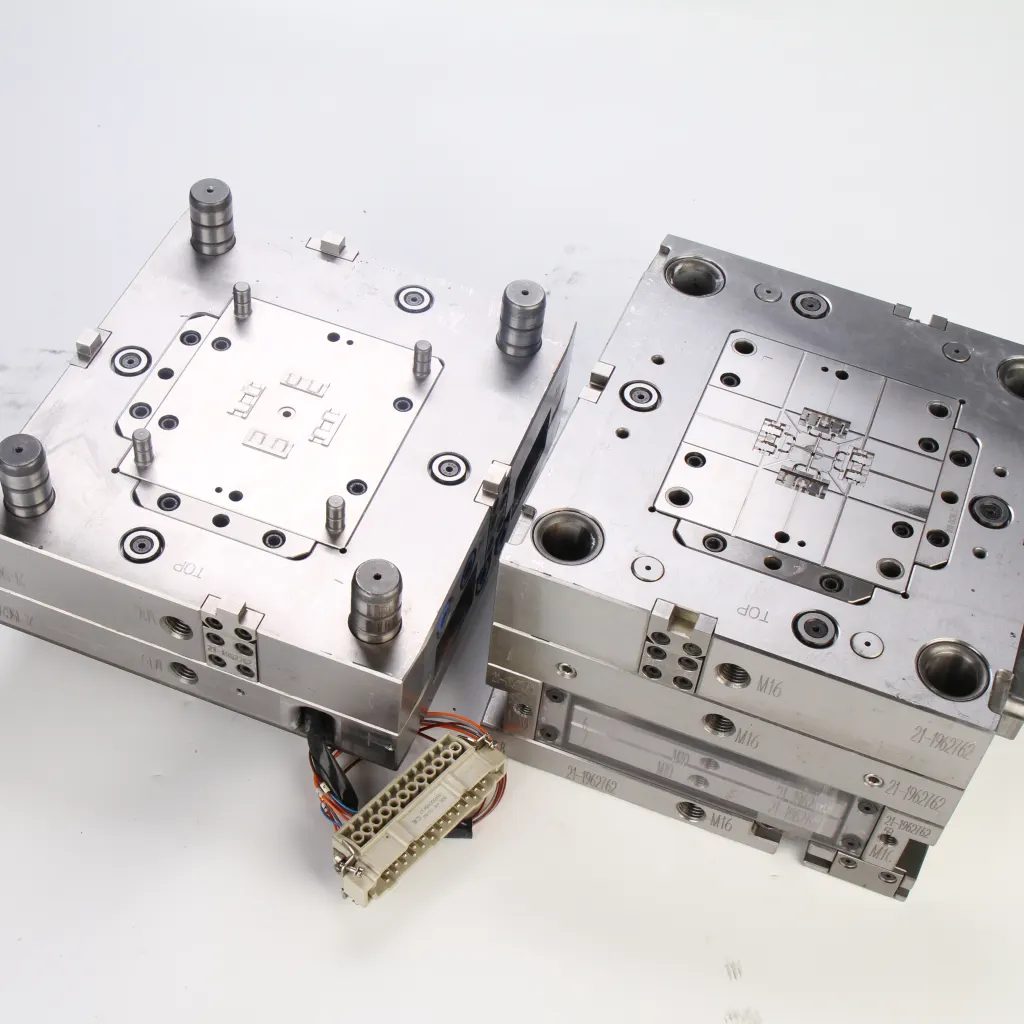
Step-by-Step Medical Injection Molding DFM Checklist
1. Wall Thickness Uniformity
Medical plastic parts (such as syringe barrels, IV pump housings, and diagnostic cassettes) trend toward thin-wall designs. Ensuring uniform wall thickness throughout the part is paramount; sudden changes in wall thickness cause uneven cooling rates, leading to internal stresses, sink marks, or severe warping.
Key Standard: Maintain consistent wall thickness across the entire part (typically between 1.0 mm and 3.0 mm). Where thicker sections are unavoidable, use coring out or ribbed structures for a smooth transition.
Pitfall Avoidance: Rib thickness should be kept to 50%–60% of the main wall thickness, with a base radius of at least 0.4 times the wall thickness to minimize stress concentration.
2. Draft Angles and Side-Actions
Medical components frequently demand high-gloss optical clarity, textured finishes, or micro-features. Forcing parts out of the mold without proper design causes surface scratches or stress whitening.
Key Standard: Apply a minimum draft angle of 0.5° to 1.5° on all vertical surfaces. For textured surfaces, add an extra 1° of draft for every 0.025 mm (0.001 in) of texture depth.
Pitfall Avoidance: For medical devices with undercuts (such as snap-fit connectors), plan for lifters or side-action sliders early in the DFM phase to prevent difficult tool modifications later.
3. Gate Location and Runner Balance
Medical-grade engineering resins (e.g., PC, COP, PEEK) are highly sensitive to shear heat; improper gating can cause polymer degradation, silver streaks, or excessive shear stress.
Key Standard: Position gates at the thickest non-cosmetic sections, utilizing submarine or pin-point gates to enable automatic degating.
Pitfall Avoidance: Multi-cavity molds must undergo Moldflow simulation to verify balanced filling across all cavities, preventing density variations that could alter the optical or fluidic performance of In-Vitro Diagnostic (IVD) devices.
4. Shrinkage Rates and Tolerance Control for Medical Resins
Specialty medical plastics (such as PP, PSU, PPSU, and COC/COP) carry high material costs and exhibit variable shrinkage rates.
Key Standard: Compensate mold cavity dimensions using exact flow-direction and cross-flow shrinkage data provided by material suppliers.
Pitfall Avoidance: Reserve steel-safe micro-tolerances on critical mating dimensions, and validate parts during First Article Inspection (FAI) using CMM or optical 3D scanning.
Data & Case Study: ROI of DFM Optimization
Real-World Case Study:
| Evaluation Dimension | Without DFM Review (Traditional Approach) | With Complete DFM Checklist (Optimized Approach) |
| Average Mold Trials | 3 – 5 iterations | 1 – 2 iterations |
| Tool Re-work Rate | Up to 35% | Under 5% |
| Development Cycle | 16 – 20 weeks | 10 – 12 weeks |
| Regulatory Compliance | Frequent changes; delays in IQ/OQ | First-time pass; fully compliant with ISO 13485 |
A leading medical device OEM was developing a transparent COP microfluidic chip. Due to unoptimized gate placement, weld lines created micro-bubbles in the optical inspection zone. By implementing a comprehensive DFM review and Moldflow analysis, the engineering team rotated the gate location by 45° and optimized vent depth. As a result, the tool produced parts meeting 100% hermetic sealing and optical transmission specs on the very first trial run, saving nearly $30,000 in tooling modification costs.
Frequently Asked Questions (FAQ)
Q1: Why are DFM requirements stricter for medical molds than standard injection molds?
A: Medical devices directly impact patient safety and are governed by strict regulatory bodies like the FDA, CE, and ISO 13485. Minor flaws—such as flash, stress cracking, or dimensional drift—can cause device failure in the field. DFM resolves these issues before steel cutting, ensuring manufacturing repeatability and compliance.
Q2: When is the best time to perform a DFM review?
A: The optimal time to initiate a DFM review is right before finalizing the 3D CAD design. Modifying a part during the digital phase carries virtually zero tooling cost, whereas altering a hardened steel mold can cause exponential cost inflation and delay schedules.
Q3: How do I evaluate a mold manufacturer's DFM capability?
A: A capable medical moldmaker should provide more than basic wall thickness and draft checks. They should deliver comprehensive Moldflow Analysis reports and demonstrate proven experience in tooling high-performance medical polymers (e.g., PEEK, PPSU) with precise hot runner thermal control.
Summary
Design for Manufacturability (DFM) in medical injection molding is far more than a routine drawing review—it is the essential bridge connecting innovative product concepts to compliant, full-scale mass production. By systematically verifying wall thickness, draft angles, gating layouts, and resin characteristics early on, medical device manufacturers can de-risk tooling and significantly shorten time-to-market.