



-

Micro LSR Seal Design: Flash Prevention Tips for Precision Molding
-
Advantages of Liquid Silicone Rubber (LSR): Why It Is Replacing Traditional Rubber and Plastics
-
LSR Injection Molding (Cold Runner) vs. Compression Molding LSR (Runnerless): Process & Selection Guide
-
Medical Injection Molding DFM Checklist & Design Guidelines


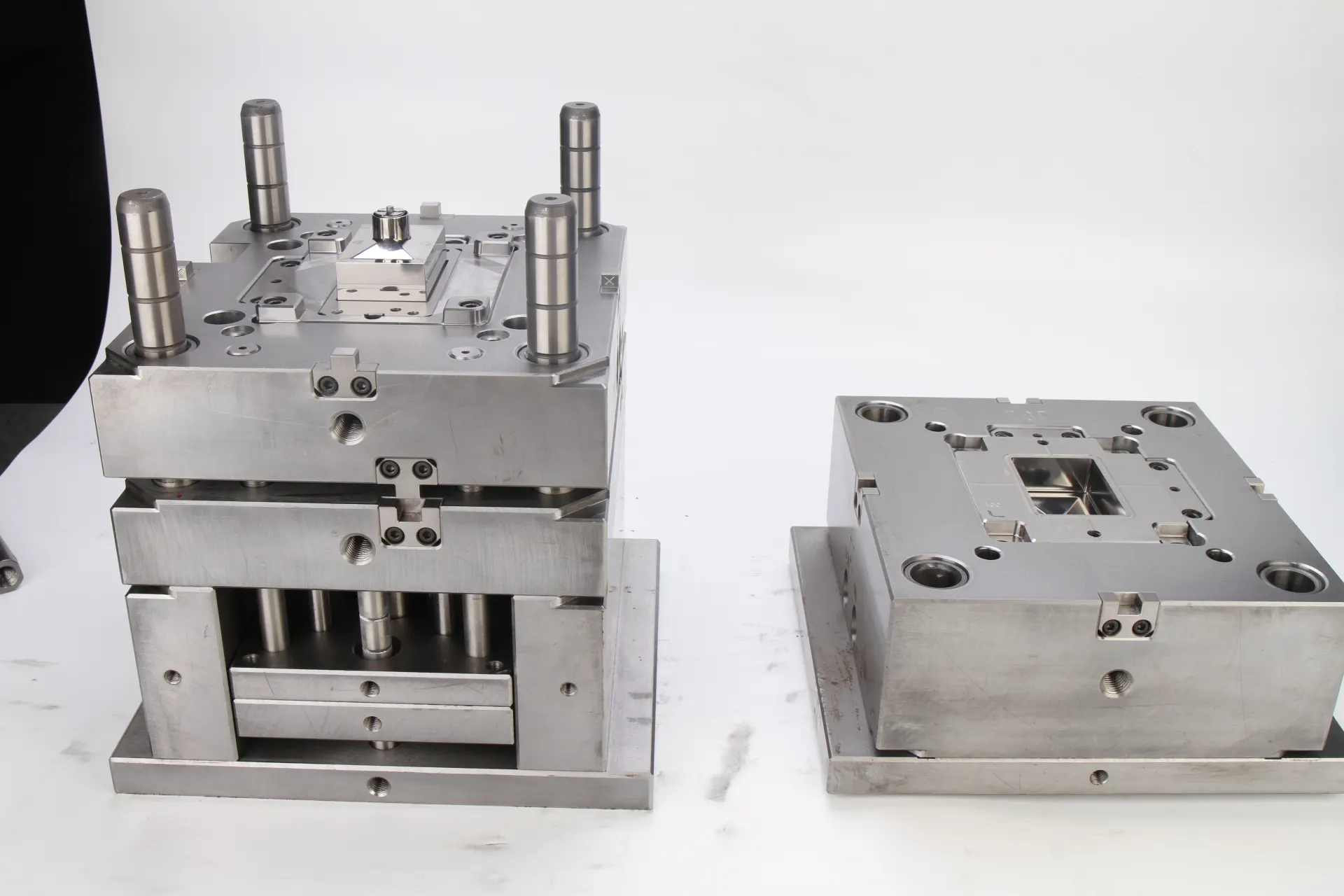
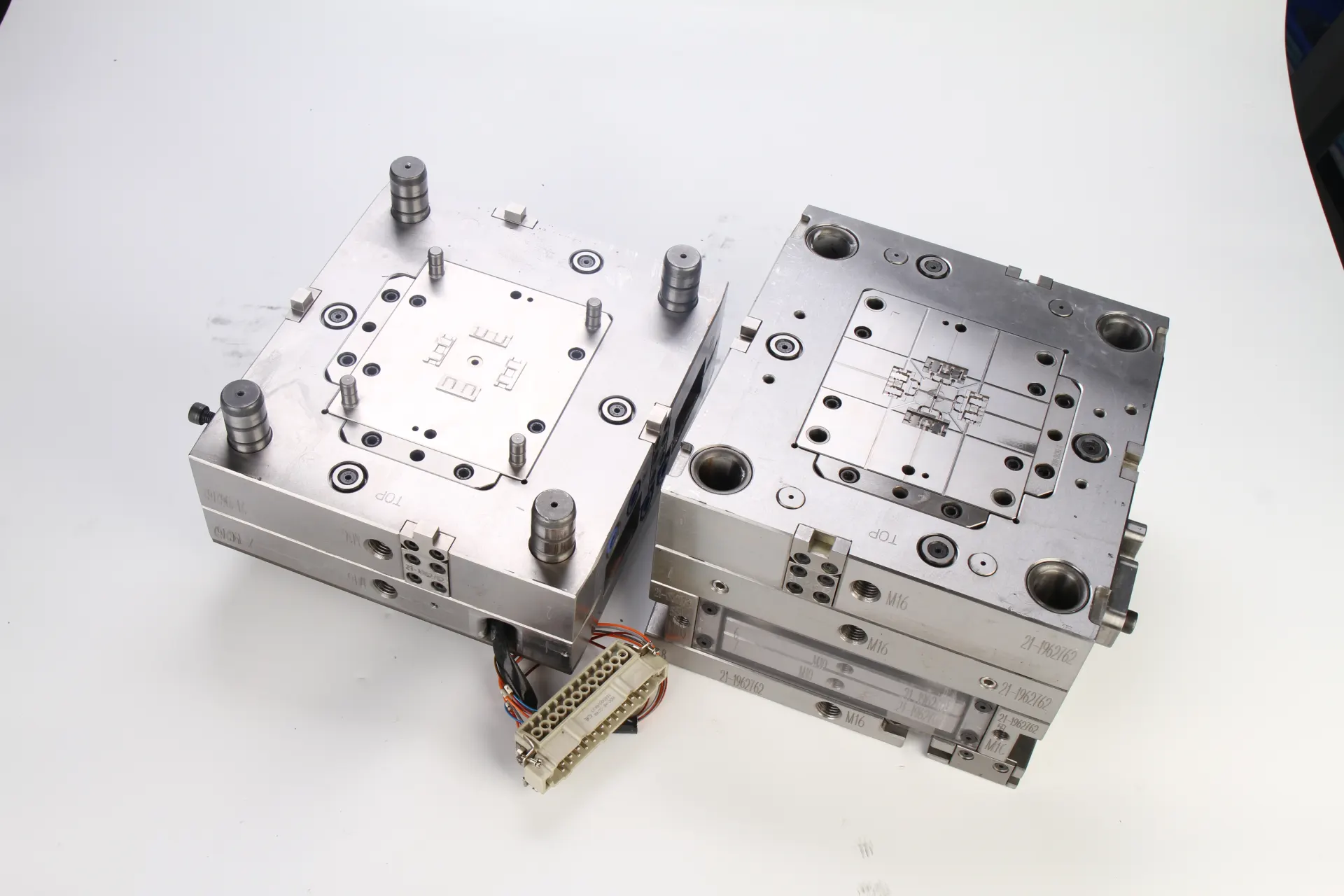
Blow Molding vs Injection Molding
2026-07-15




复制成功
In the world of plastics manufacturing, injection molding and blow molding (often spelled blow moulding in British English) are the two most prominent, yet frequently confused, fabrication processes.
This comprehensive guide breaks down Blow Molding vs Injection Molding definitions, processes, key differences, and typical applications to help you make the best decision for your project.
What is Blow Molding?
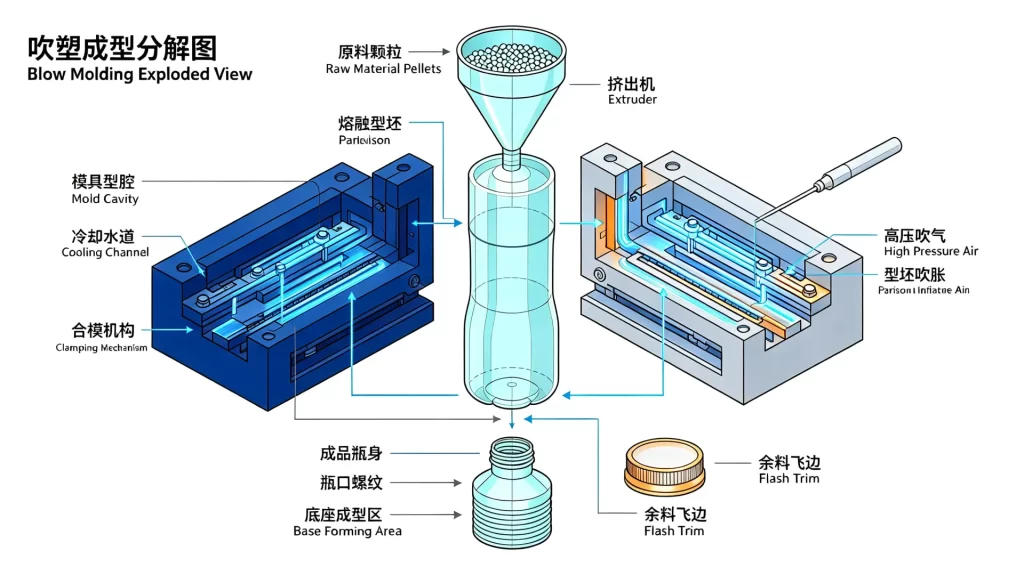
Blow molding is a highly specialized manufacturing process used to produce hollow plastic parts.
The basic concept of blow moulding is very similar to glassblowing. First, plastic raw material is melted and extruded into a hollow tube called a parison (or preform). This molten parison is then clamped inside a metal mold. Compressed air is blown into the tube, inflating the soft plastic outward so that it stretches and conforms to the shape of the mold cavity. Once the plastic cools and solidifies, the mold opens to release the hollow finished product.
Main Types of Blow Moulding:
1.Extrusion Blow Molding (EBM): The most common method, where a continuous parison is extruded, cut, clamped, and blown. It is ideal for high-volume, simple hollow objects like milk jugs and detergent bottles.
2.Injection Blow Molding (IBM): A hybrid method (injection and blow moulding combined) where the plastic is first injection-molded into a precise preform (complete with threaded necks), then transferred to a blow mold to be inflated. This is commonly used for medical and cosmetic bottles requiring high-precision necks.
3.Injection Stretch Blow Molding (ISBM): The preform is stretched axially with a core rod before being blown, which yields superior clarity and mechanical strength. This is the gold standard for carbonated beverage bottles (PET bottles).
What is Injection Molding?
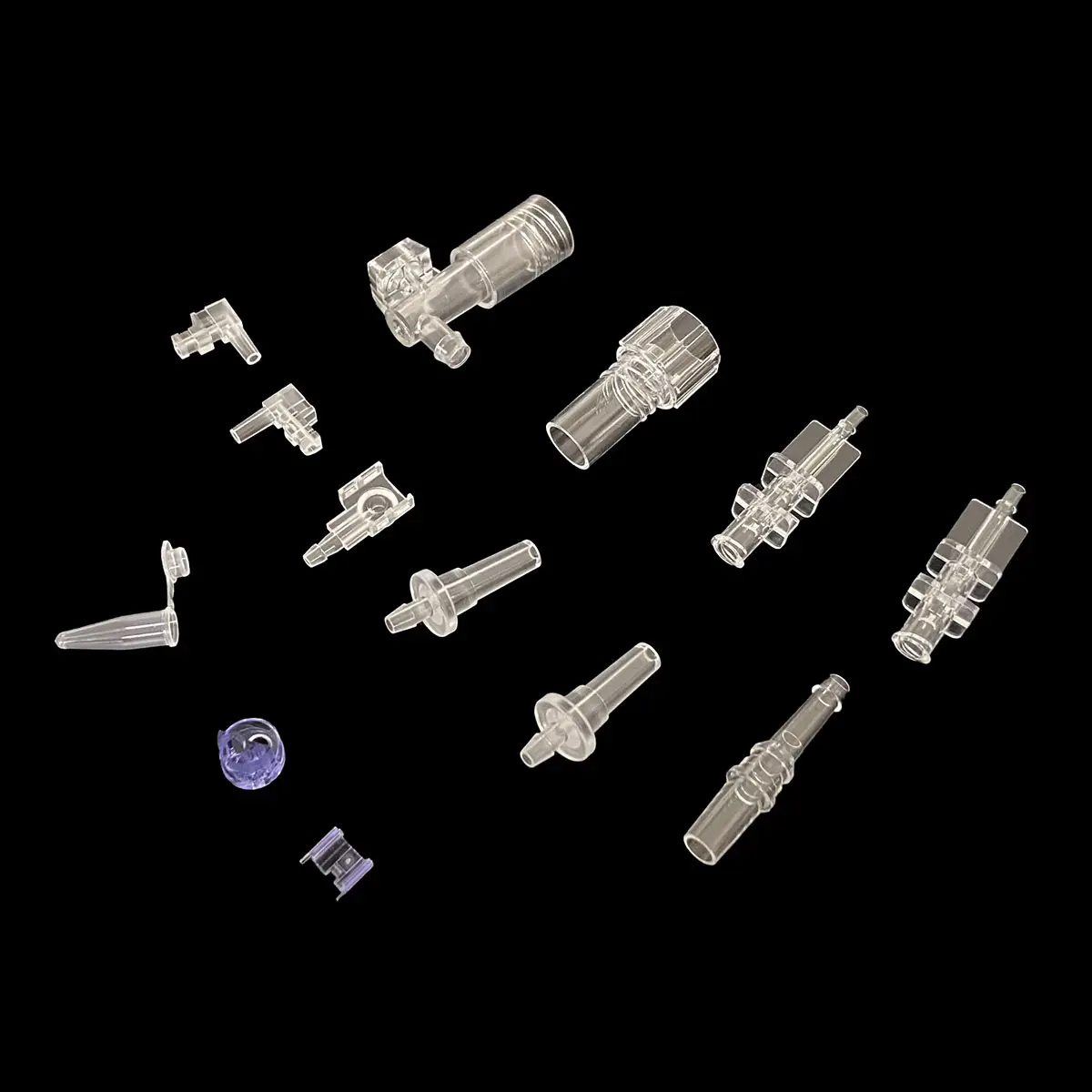
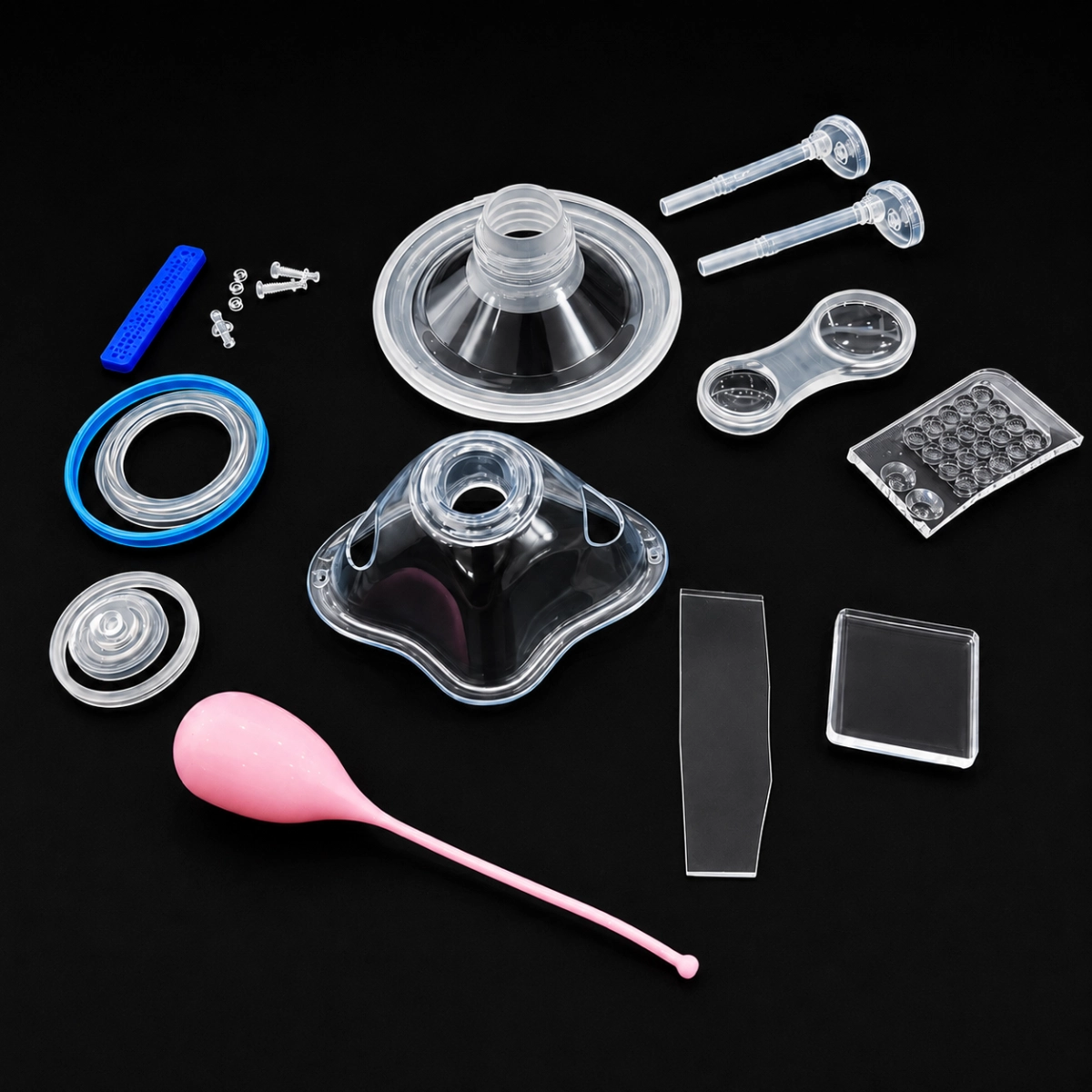
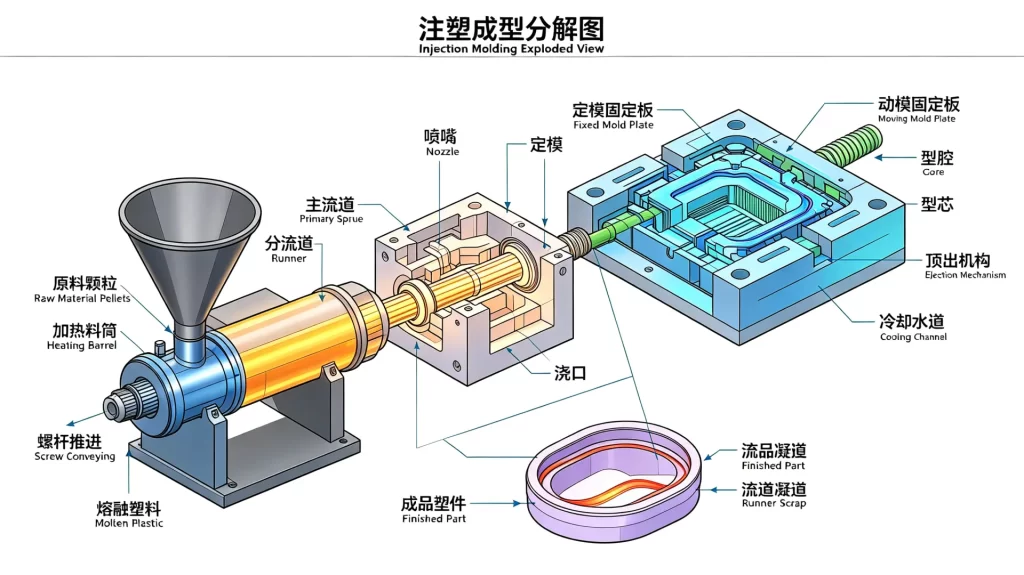
In contrast, injection molding is a manufacturing process designed to produce solid, highly complex, and tight-tolerance plastic components.
During this process, thermoplastic resins (in pellet form) are fed into a heated barrel, melted, and injected under extreme high pressure into a closed, precision-machined metal mold cavity. The molten plastic fills every intricate detail, rib, and under-cut of the mold. After the plastic cools and solidifies, the mold splits open, and ejector pins push out a fully finished, solid plastic part.
Core Advantages of Injection Molding:
1.High Precision & Complex Geometries: It can easily handle incredibly intricate designs, internal threads, and thin walls.
2.Exceptional Strength & Material Versatility: It supports a vast range of engineering-grade plastics and additives (like glass fibers) for structural durability.
3.Minimal Post-Processing: Parts emerge from the mold virtually finished with almost zero flash or scrap.
Deep Dive Comparison: blow molding vs injection molding
To help you directly compare injection and blow moulding, we have summarized the technical and economic metrics of both processes below:
| Feature / Metric | Injection Molding | Blow Molding |
| Part Geometry | Solid, complex, with internal ribs, bosses, and snaps | Hollow, single-walled, or double-walled containers |
| Clamping Pressure | Extremely high (typically 500 to 1,500+ bar) | Very low (utilizes air pressure, around 3 to 10 bar) |
| Tooling & Mold Cost | Very high (molds must withstand intense injection pressures) | Moderate to low (molds only need to shape the outer skin) |
| Wall Thickness Control | Excellent (highly uniform, mathematically calculated) | Variable (walls naturally stretch thinner at corners and edges) |
| Typical Materials | ABS, Polycarbonate, Nylon, POM, PP, etc. | HDPE, LDPE, PP, PET, and other high-ductility polymers |
| Scrap & Post-Processing | Extremely low (runners can be recycled; no flash) | Requires trimming of excess plastic (flash) from top and bottom |
The Verdict: Making Your Decision
When weighing blow molding vs injection molding for your next manufacturing project, keep this simple rule of thumb in mind:
Is the part hollow? If yes, and its main purpose is containment or airflow, Blow Molding is your go-to. It offers drastically lower tooling costs and fast cycle times for hollow parts.
Is the part solid with complex, detailed geometry or tight mating tolerances? If yes, Injection Molding is the only viable option. While initial tooling costs are higher, the speed, precision, and part-to-part consistency are unmatched at scale.
If you have decided to opt for injection molding production, please contact us. We produce over 200 sets of molds annually, have a 10,000-square-meter injection molding workshop, and have obtained certifications for ISO9001, ISO14001, ISO13485, and ISO16949. We also have a Class 10,000 cleanroom and automated assembly lines.
Contact Information: Mold injection molding technology capability Certificate Competence
Email: Yuliya.chen@yizemould.com
Telephone/WhatsApp: +86 13342659272