



-

Micro LSR Seal Design: Flash Prevention Tips for Precision Molding
-
Advantages of Liquid Silicone Rubber (LSR): Why It Is Replacing Traditional Rubber and Plastics
-
LSR Injection Molding (Cold Runner) vs. Compression Molding LSR (Runnerless): Process & Selection Guide
-
Medical Injection Molding DFM Checklist & Design Guidelines
Liquid Silicone Molding Materials: Ultimate Selection & Mold Guide
2026-09-04




复制成功
Choosing the right material for your next hardware or medical device project can make or break your product launch. You've spent weeks finalizing your 3D CAD models, but when it comes to material selection, things get blurry. Should you choose a standard 40 Shore A Liquid Silicone Rubber (LSR), high-consistency rubber (HCR), or a specialized optical-grade material? Choosing the wrong liquid silicone molding material often leads to incomplete mold filling, excessive flash, unwanted yellowing, or catastrophic delamination during high-volume production.
Worse yet, redesigning a mold tool after discovering a material incompatibility can cost thousands of dollars and push your market launch back by months.
In this comprehensive guide, we will break down everything you need to know about liquid silicone molding materials—from physical properties and curing chemistry to mold tooling considerations and design pitfalls—so you can specify the exact material for your production run with 100% confidence.
What Are Liquid Silicone Molding Materials?
Liquid Silicone Rubber (LSR) is a two-component, platinum-cured elastomer optimized for liquid injection molding (LIM). Unlike traditional rubbers that are processed as high-viscosity gums, liquid silicone molding materials enter the injection system as low-viscosity liquids .
Component A: Base Silicone + Platinum Catalyst - Static Mixer - Heated Mold (170-200°C)- Cured LSR Part
Component B: Base Silicone + Crosslinker/Inhibitor
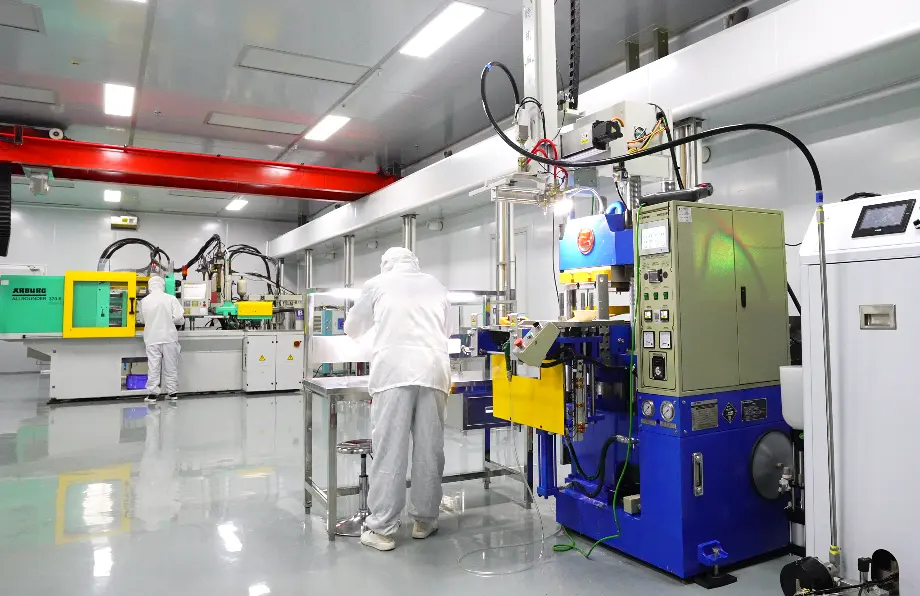
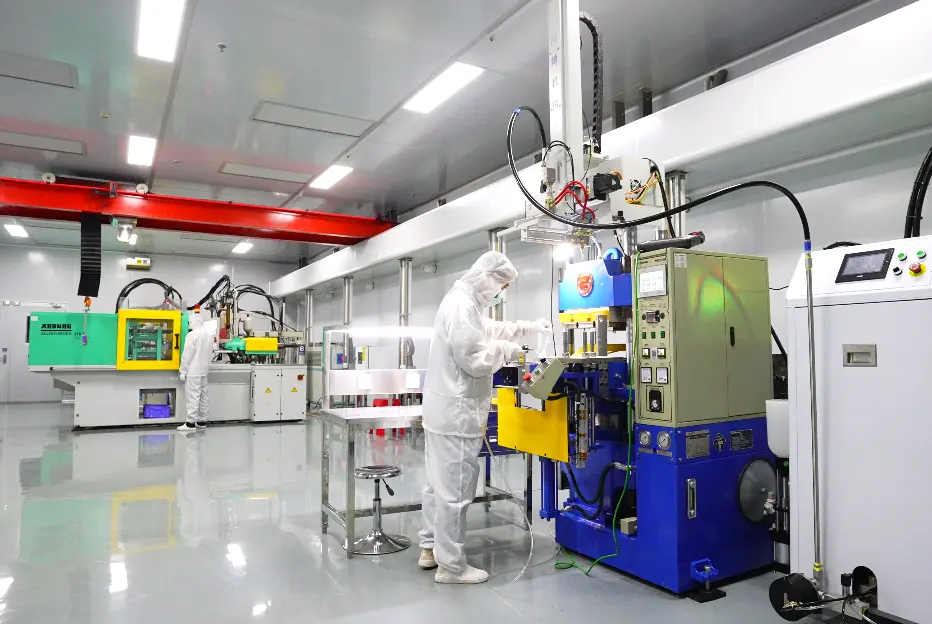
The material is pumped in a precise 1:1 ratio through a static mixer into a heated mold cavity , where vulcanization happens rapidly within seconds.
Key Performance Attributes of LSR:
Thermal Stability: Retains mechanical properties across extreme temperatures (-50°C to 200°C+).
Biocompatibility: Chemically inert, tissue-friendly, and compliant with ISO 10993 and USP Class VI.
Chemical & Environmental Resistance: Exceptional resistance to UV radiation, ozone, water, and mild acids.
Low Compression Set: Maintains seal integrity over millions of cycles without permanent deformation.
Key Material Types & Curing Chemistries
Not all liquid silicone molding materials are created equal. Depending on your end-use application, you must choose the appropriate formulation and curing mechanism.
1. Platinum-Cured (Addition-Cured) LSR
This is the gold standard for medical, food-contact, and high-precision electronics applications.
Mechanism: A hydrosilylation reaction between vinyl groups and hydride groups catalyzed by platinum.
Pros: No toxic byproducts, fast cycle times, non-yellowing, superior tear strength.
Cons: Susceptible to catalyst poisoning (inhibited by sulfur, amines, and tin compounds).
2. General-Purpose vs. Self-Adhesive Grades
Standard LSR: Requires primers or surface treatment to bond with plastic or metal substrates.
Self-Adhesive (Self-Bonding) LSR: Formulated with active adhesion promoters. Ideal for two-shot (2K) overmolding directly onto substrates like PC, PBT, or PA without extra priming steps.
3. Optical-Grade LSR
A ultra-clear liquid silicone material designed to replace glass and PMMA in automotive lighting and LED optics. It provides light transmittance above 95% and will not yellow over lifetime thermal stress.
Material Selection Criteria: Matching Application to Grade
Selecting the right grade requires balancing mechanical performance against manufacturing costs. Refer to the table below to select the ideal material grade for your application:
| Material Grade | Hardness Range (Shore A) | Tensile Strength (MPa) | Key Feature | Common Applications |
| Medical / ISO 10993 | 10 – 80 | 8.0 – 11.5 | Ultra-pure, biocompatible | Surgical tools, catheters, seals |
| Self-Adhesive (2K) | 30 – 70 | 6.5 – 10.0 | Direct bonding to plastics | Overmolded handles, wearable devices |
| High Tear Strength | 30 – 60 | 9.0 – 12.0 | Flex-fatigue resistance | Valves, diaphragms, pump components |
| Optical Grade | 60 – 80 | 6.0 – 8.5 | High transparency (>95%) | Light pipes, automotive headlights |
| Oil-Bleeding / Self-Lubricating | 30 – 50 | 7.0 – 9.0 | Reduces friction coefficient | Automotive wire harness seals |
LSR vs. HCR: A Comparative Engineering Analysis
A common engineering dilemma is choosing between Liquid Silicone Rubber (LSR) and High Consistency Rubber (HCR). While both share a silicone backbone, their processing methods and material characteristics differ significantly.
| LSR (Liquid) | HCR (Solid) |
| Viscosity: Liquid (100k-1M m pas) | Viscosity: High/Gum-like |
| Pumped via Liquid Injection | Fed via Compression/Transfer |
| Cycle Time: Fast (15-60 sec) | Cycle Time: Slow (2-10 min) |
| Flash Risk: High (Needs tight clearance) | Flash Risk: Low |
| Fully Automated Production | Requires Manual Handling |

When to Choose LSR over HCR:
High Volume Production: Automated closed-loop LIM machines reduce labor costs.
Complex Geometries: Low viscosity allows liquid silicone to flow effortlessly into thin-walled sections (down to 0.2 mm).
Strict Cleanroom Requirements: Liquid feeding systems minimize human contamination.
5 Design & Tooling Mistakes to Avoid with Liquid Silicone
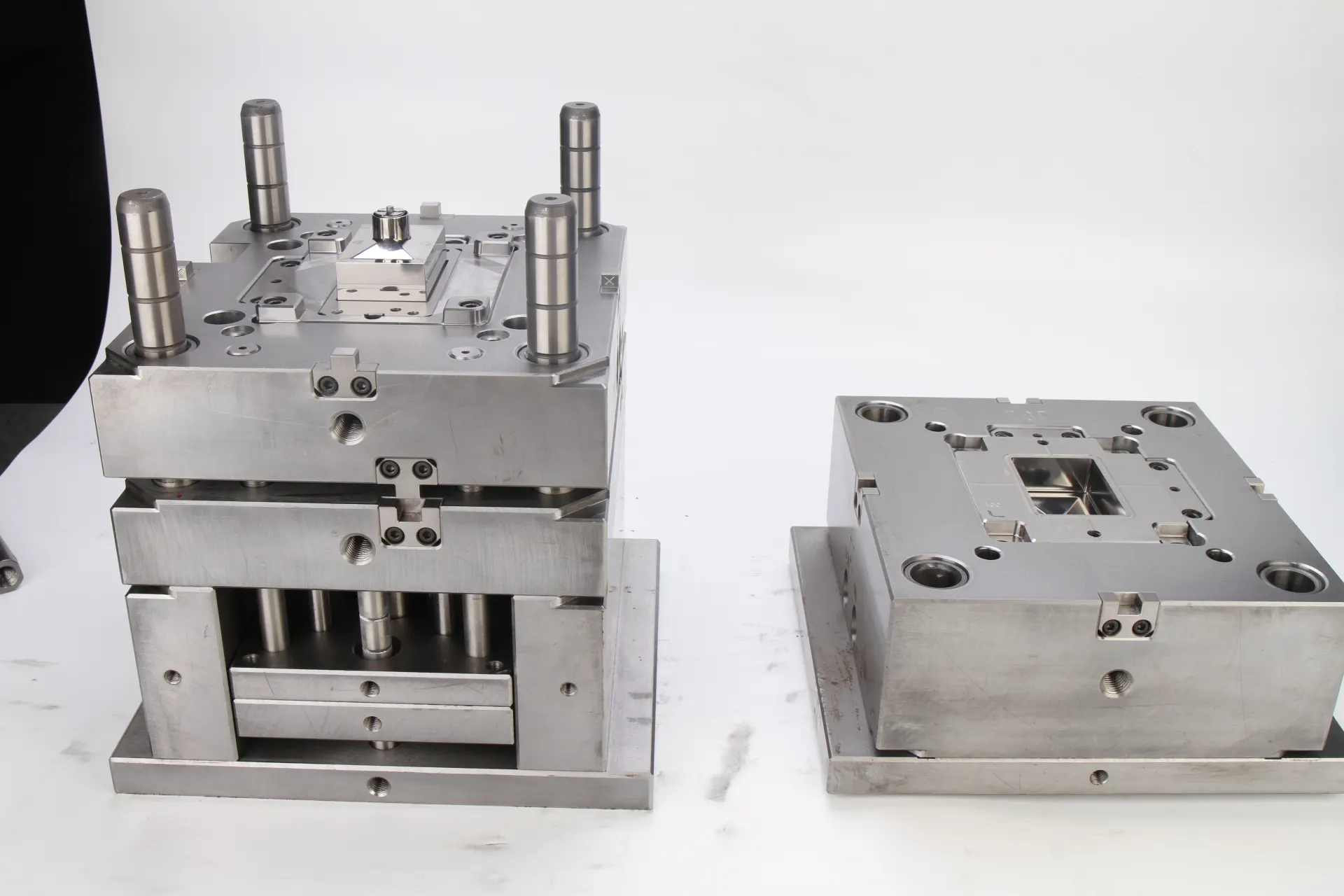
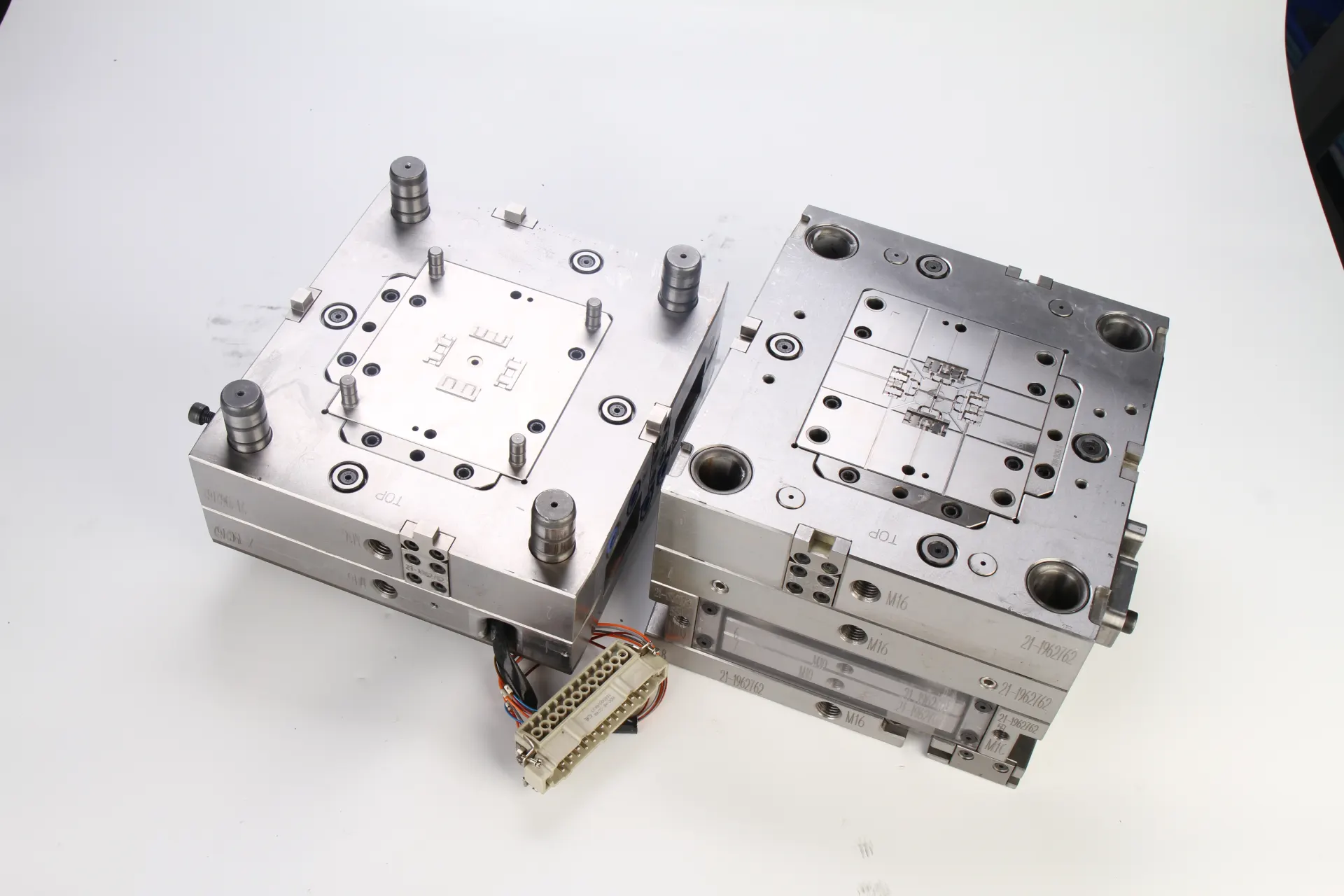
Because liquid silicone molding materials flow much more readily than thermoplastics, standard plastic injection mold design rules do not apply. Avoid these critical mistakes:
1. Inadequate Tooling Tolerances (Causing Excessive Flash)
LSR flows into gaps as small as 2 to 5 microns (0.002 mm - 0.005 mm). Mold shut-offs and parting lines must be machined to extreme precision; otherwise, severe flash will occur, forcing expensive post-processing deflashing.
2. Ignoring High Linear Shrinkage
Liquid silicone experiences high thermal expansion during curing and cools with a linear shrinkage rate typically between 2.5% and 3.5% (compared to 0.5%–1.5% for most thermoplastics). Always scale your mold cavities accurately based on the specific material datasheet.
3. Platinum Poisoning / Cure Inhibition
If your mold tool or mixing system comes into contact with sulfur-cured rubbers, amine-cured epoxies, or certain organotin catalysts, the platinum catalyst in the LSR will be neutralized, leaving the silicone uncured and tacky.
4. Poor Vacuum Venting Design
Because the mold cavity is closed during high-pressure liquid injection, trapped air cannot escape fast enough. Without proper vacuum venting prior to injection, air burns and short shots will compromise the part.
5. Uneven Mold Temperature Distribution
LSR vulcanizes via heat. If your mold block has uneven heating channels (temperature gradients > 5°C across the cavity), parts will experience inconsistent curing times, warp, or suffer dimensional instability.
Frequently Asked Questions (FAQ)
Q1: What is the shelf life of liquid silicone molding materials?
Unmixed Component A and Component B generally have a shelf life of 12 to 24 months when stored in sealed containers below 30°C. Once Component A and B are mixed in the static mixer, pot life drops to a few hours unless chilled.
Q2: Can liquid silicone rubber be recycled?
Thermoset liquid silicone cannot be re-melted and re-injected like thermoplastics. However, cured LSR can be mechanically ground into micro-fillers for industrial applications or chemically recycled (depolymerized) back into siloxane monomers.
Q3: What is the minimum wall thickness achievable with LSR injection molding?
Thanks to its low liquid viscosity, LSR can fill wall thicknesses as thin as 0.2 mm to 0.5 mm over short flow lengths, provided the mold tool is equipped with a high-vacuum evacuation system.
Q4: How do I prevent bubbles in liquid silicone parts?
Ensure the two-part system passes through a high-efficiency static mixer under pressure, and ensure your mold tool uses an active vacuum system to evacuate cavity air to at least -0.9 bar before injecting the liquid material.
Conclusion & Next Steps
Selecting and processing liquid silicone molding materials requires a thorough understanding of polymer chemistry, mold precision, and thermal dynamics. By matching the appropriate durometer, curing system, and grade to your specific functional demands—and designing your tooling to handle low-viscosity flow—you can achieve high-yield, flash-free production runs.
Learn more about LSR mold injection molding