



-

Micro LSR Seal Design: Flash Prevention Tips for Precision Molding
-
Advantages of Liquid Silicone Rubber (LSR): Why It Is Replacing Traditional Rubber and Plastics
-
LSR Injection Molding (Cold Runner) vs. Compression Molding LSR (Runnerless): Process & Selection Guide
-
Medical Injection Molding DFM Checklist & Design Guidelines
Medical Dropper Bottle Injection Moulding: The Complete Precision Manufacturing Guide
2026-09-12


复制成功
In the medical device industry, a micro-leak or a sub-millimeter dosage error in a dropper bottle isn't just a quality failure—it's a patient safety hazard and a regulatory nightmare. Precision medical dropper bottles require exact volumetric consistency, biocompatibility, and zero-contamination manufacturing. Achieving this level of quality during high-volume production demands deep expertise in liquid dispensing physics, specialized mold design, and stringent cleanroom protocols.
This technical guide breaks down the core elements of medical dropper bottle injection moulding, covering raw material selection, specialized mold design, ISO-compliant processing, and quality assurance strategies.
Key Challenges in Medical Dropper Bottle Moulding
Manufacturing medical-grade liquid dispensing systems presents distinct engineering challenges compared to standard commercial packaging.
1. Ultra-Precise Orifice Geometry
The tip of the dropper controls drop size and volumetric accuracy (typically measured in microliters). Variations of just 0.01mm in the inner nozzle diameter can cause dosage deviations, violating FDA and EMA medical compliance.
2. Contamination-Free Environment
Opthalmic and diagnostic solutions require sterile contact surfaces. Particulate contamination, mold releases, or airborne oil droplets from hydraulic presses can invalidate entire production batches.
3. Tight Sealing Integrity
The interface between the bottle neck, nozzle insert, and screw cap must achieve a hermetic seal to prevent leakage, evaporation, and degradation of sensitive reagents.
Material Selection: Balancing Biocompatibility & Flexibility
Choosing the right resin is critical for ensuring chemical inertness, flexibility, and compliance with USP Class VI and ISO 10993 standards.
| Component | Preferred Polymer | Key Properties | Sterilization Compatibility |
| Bottle Body | LDPE / LLDPE | High squeezability, excellent chemical resistance | Gamma, EtO |
| Dropper Nozzle Tip | HDPE / PP | Dimensional stability, precise orifice formation | Autoclave (PP), EtO |
| Overcap | Polypropylene (PP) | High thread strength, stress-crack resistance | Gamma, EtO, Autoclave |
| Sight Gauge / Window | COC / COP | Glass-like clarity, ultra-low moisture absorption | Gamma, EtO |
Note: All resins used in medical injection moulding must be fully traceable and medical-grade, certified free of animal-derived additives (ADCF) and phthalates.
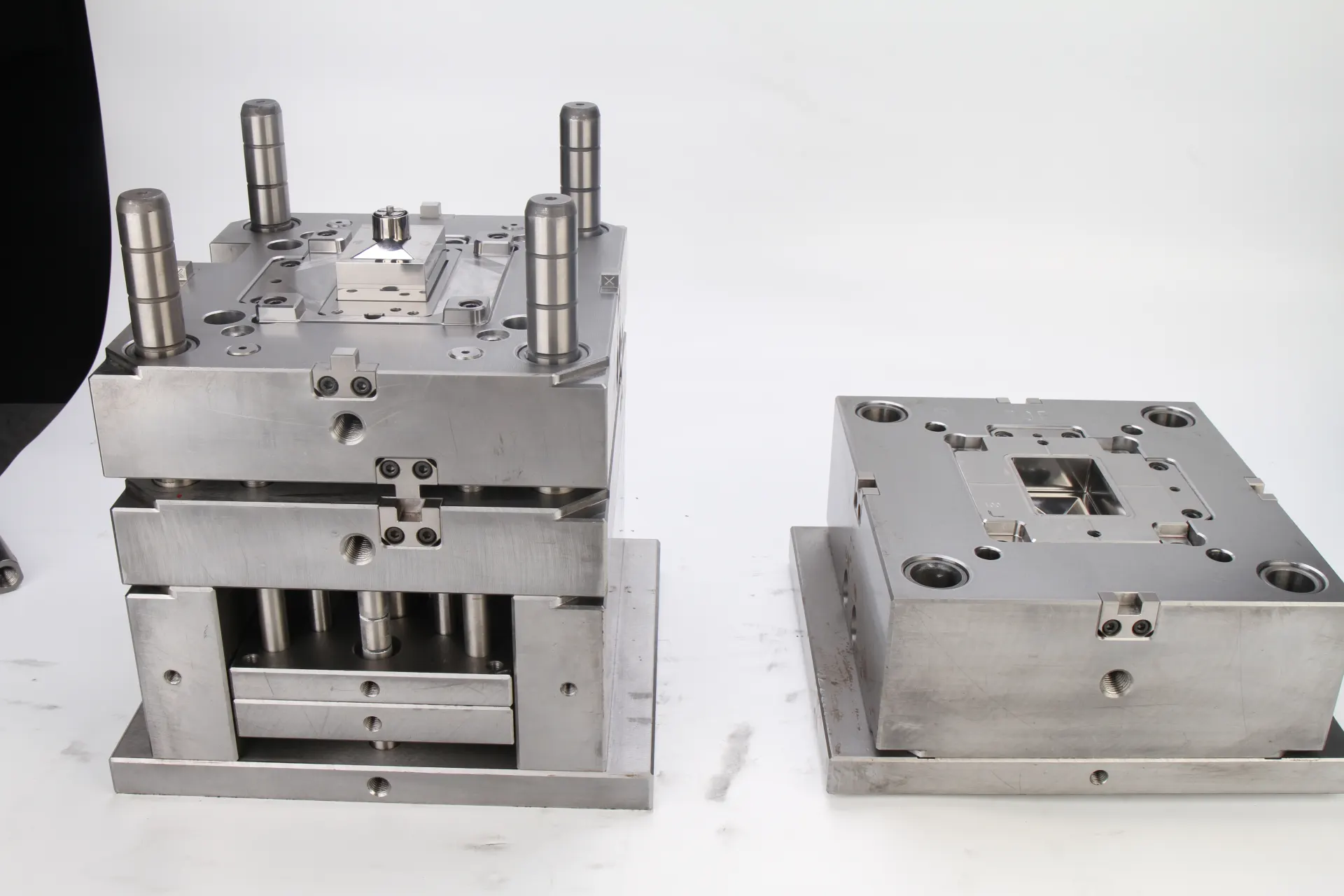
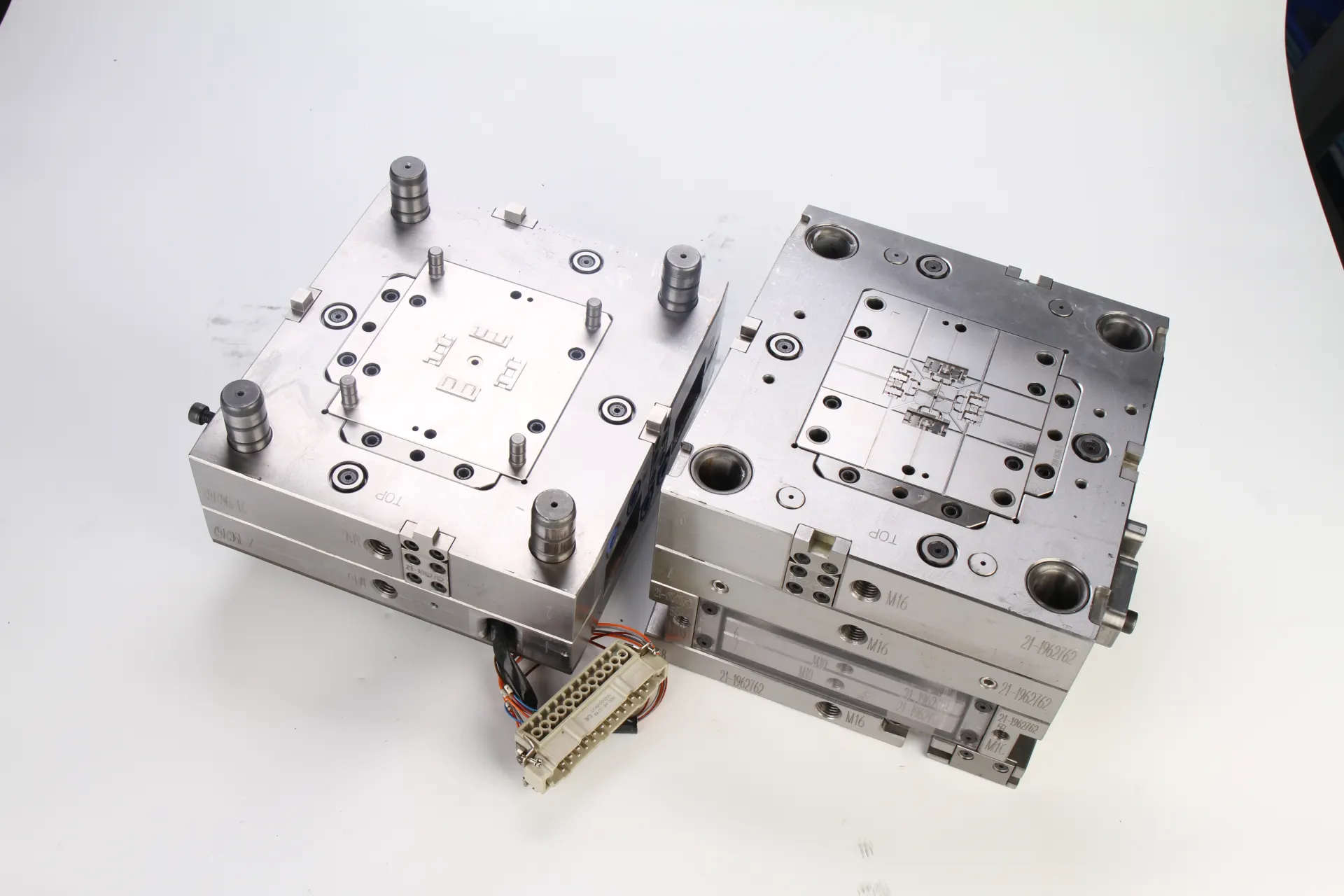
Precision Mold Engineering for Dropper Bottle Components
A successful production run starts with the mold design. Custom tooling for medical dropper components must account for material shrinkage, flow dynamics, and wall thickness uniformity.
| Cold Runner System no High waste, particulate risk |
| Valve-Gated Hot Runner Zero regrind, controlled shear, clean gate mark |
| Core Pins & Conformal Cooling Uniform wall thickness, fast cycle time |
| Class 8 Cleanroom Ejection System Electric drive, no hydraulic oil contaminants |
Advanced Core Pin Alignment
Dropper nozzles require extremely long, thin core pins to form the internal fluid channel. Under high injection pressures, core pin deflection can lead to uneven wall thickness and off-center dispensing holes.
Solution: Implement multi-point core pin support mechanisms and high-thermal-conductivity copper alloys (e.g., Ampcoloy) to stabilize pin geometry during the high-pressure injection phase.
Valve-Gated Hot Runner Systems
Cold runner systems create waste regrind that cannot be reused in certified medical applications. Valve-gated hot runner systems eliminate runner waste, control shear heat to prevent polymer degradation, and produce clean gate marks that do not interfere with seal surfaces.
Cleanroom Injection Moulding & Process Control
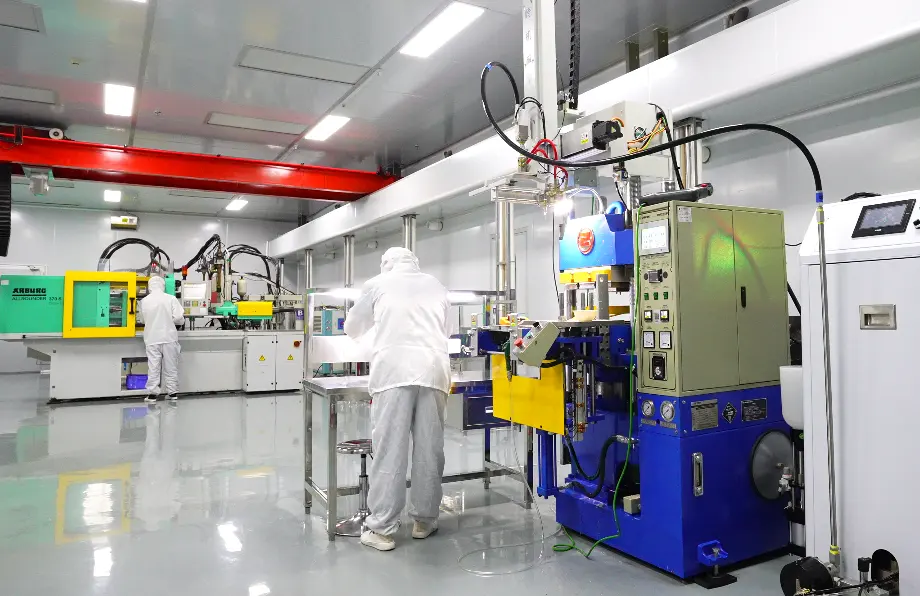
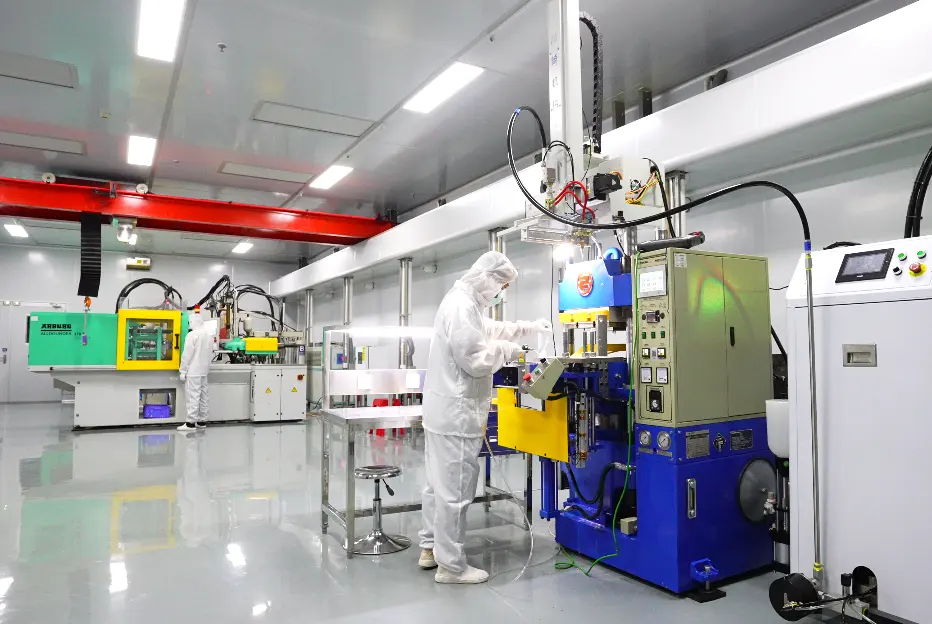
Medical dropper bottle components must be manufactured inside validated cleanroom environments to meet regulatory standards.
ISO Class 7 / Class 8 Requirements
All-Electric Injection Moulding Machines: Replaces hydraulic systems to eliminate oil vapor contamination risks and achieve repetitive shot-to-shot precision within ±0.01g.
HEPA Air Filtration & positive pressure controls: Prevents ambient airborne particulates from settling into open mold cavities.
Automated Robotic Handling: Side-entry high-speed robots transfer molded parts directly into inline visual inspection stations and sterile packaging bags, avoiding human contact.
Common Defects in Medical Moulding & Solutions
| Defect | Root Cause | Engineering Solution |
| Flash on Nozzle Orifice | Excessive injection pressure or parting line wear | Reduce peak cavity pressure; rework mold parting lines; check clamp force. |
| Sink Marks on Cap Threads | Non-uniform wall thickness; insufficient hold pressure | Optimize wall transitions; extend hold time; install conformal cooling inserts. |
| Micro-Void In Nozzle Tip | Trapped gas; premature gate freeze-off | Increase vent depth to $0.015\text{ mm}$; optimize injection speed profile. |
| Particulate Contamination | Mold lube migration or hydraulic aerosol | Switch to dry-lubricated mold coatings and all-electric press platforms. |
Successful medical dropper bottle injection moulding requires balancing material selection, precision tool engineering, cleanroom compliance, and automated process control. Partnering with an experienced medical moulding specialist ensures your product meets strict regulatory standards while maintaining scalable manufacturing yields.
Frequently Asked Questions (FAQ)
Q1: What cleanroom classification is required for manufacturing medical dropper bottles?
Most regulatory bodies require at least an ISO Class 8 cleanroom (Class 100,000) for medical packaging components. For direct drug-contact parts or ophthalmic applications requiring immediate fill-finish readiness, an ISO Class 7 cleanroom is often specified.
Q2: Why is LDPE preferred over HDPE for the bottle body?
LDPE (Low-Density Polyethylene) offers a lower flexural modulus than HDPE, giving it superior flexibility and memory. This allows users to squeeze the bottle comfortably and deliver consistent drop volumes without permanently deforming the container.
Q3: How do you prevent core pin deflection in long, narrow dropper nozzles?
Pin deflection is minimized by using high-stiffness tool steels (such as H13 or stainless steel 420), optimizing gate positions to balance flow forces around the pin, and applying multi-stage injection speed profiles to reduce initial pressure spikes.
Learn more case studies